How to Pack Furniture Before Moving — A Step-by-Step Guide
Packing is not wrapping furniture in whatever comes to hand; it is matching each material to the item it protects. This guide sets out exactly what you need, how much of it and how to use it.
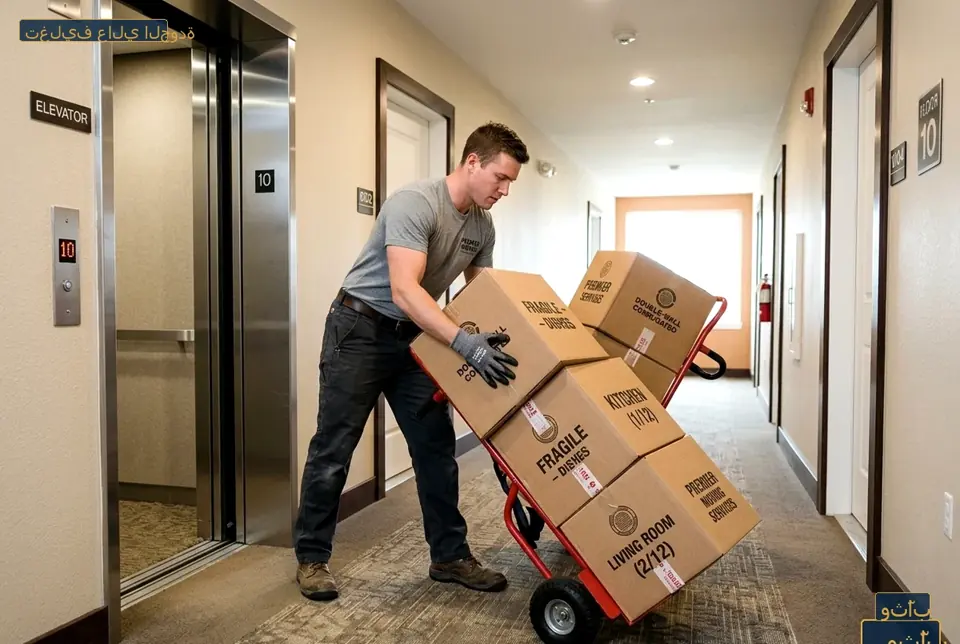
The basic rule of packing furniture
The principle behind correct packing is to protect each surface from the specific threat it faces, rather than wrapping everything in one material. Painted timber is threatened by scratching and abrasion, so it needs a soft moving blanket against the surface with stretch film to hold it. Glass and mirrors are threatened by impact and vibration, so they need shock-absorbing foam then rigid corrugated card. Upholstery is threatened by dust and soiling, so it needs a complete plastic cover. Engineered board is threatened by moisture — a genuine risk in coastal Jeddah — so it needs a plastic barrier on bases and edges. Electronics are threatened by pressure and vibration, so they need moulded foam or their original cartons. Using stretch film directly on painted timber, the most common domestic packing error, traps moisture beneath it and can leave adhesive residue on the finish in Jeddah's heat, particularly if it stays on for days.
How to pack each type of furniture
Four main categories, each needing a completely different approach:
Painted wooden furniture
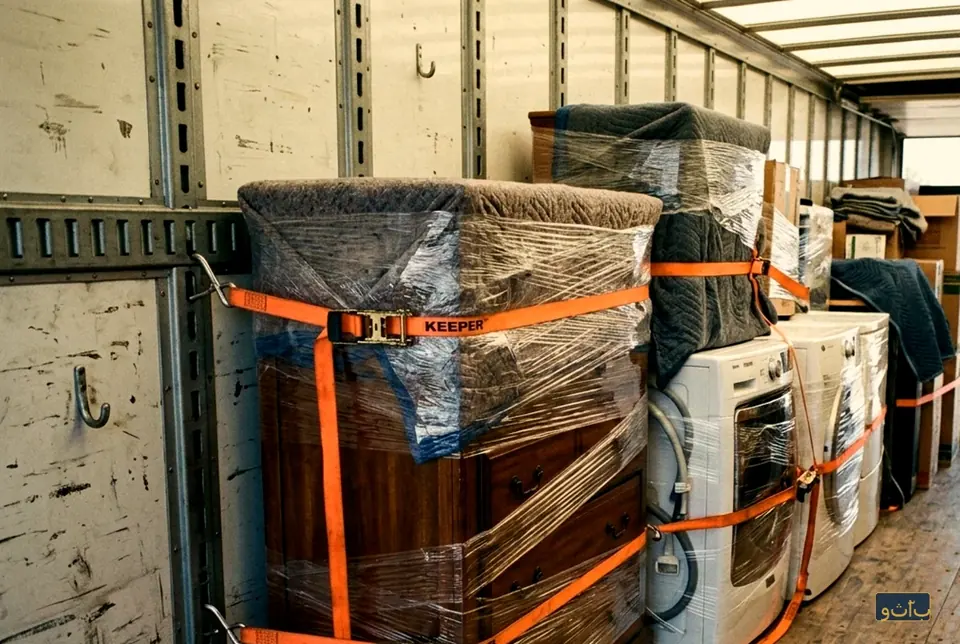
Never put stretch film directly onto painted timber. Start with a soft moving blanket against the surface covering it completely, then secure it with stretch film on the outside. Protect corners and edges with foam or folded card since they are the first points of impact, and remove protruding handles where possible and bag them with a label.
Glass, mirrors and screens
Tape an X across the face of a mirror or glass panel — not to prevent breakage but to hold the fragments together if it happens. Then wrap in two layers of bubble, then corrugated card on both faces, and mark it “glass — this way up”. Always carry them vertically, never flat.
Upholstery and mattresses
Cover sofas and mattresses completely in plastic to keep out dust and dirt. Mattresses need proper mattress bags in the right size rather than loose wrapping. Never place anything heavy on upholstery in the truck, because prolonged pressure leaves permanent deformation in the foam.
Kitchenware and glassware
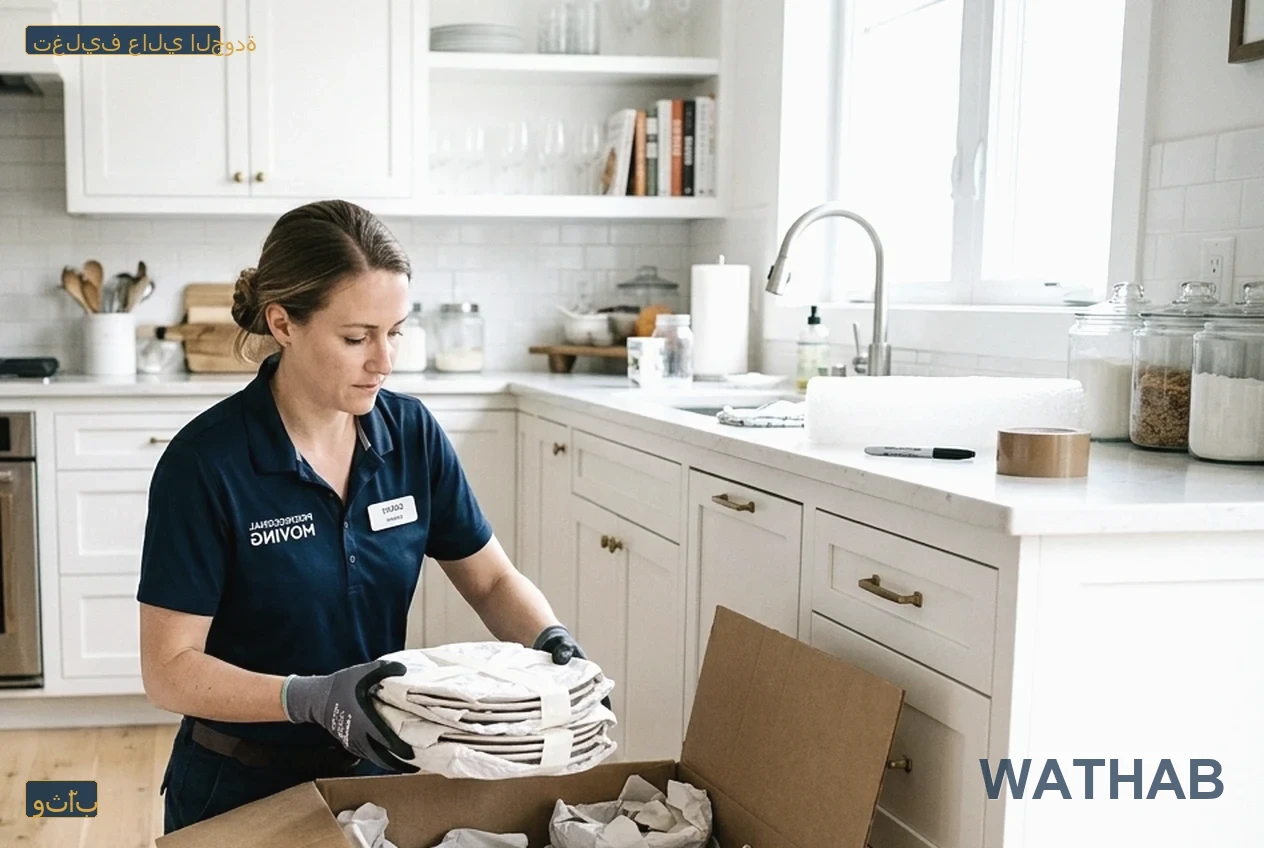
Wrap each glass item separately in paper and stand plates on edge in the box rather than stacking them flat, because the vertical position is far stronger. Fill every void with crumpled paper so nothing can move; the simple test is to shake the box, and if you hear movement there is not enough padding.
When to start packing and in what order
Timing and sequence save more than any material can.
Begin packing a week to ten days before the move, not the night before. The logical order runs from what you do not use daily to what you use until the last moment: books, ornaments, out-of-season clothing and occasion items first; then surplus kitchenware and appliances you rarely use; then everyday clothing and linen; and finally kitchen and bathroom essentials on the last day. That progression lets you live almost normally until moving day rather than camping among boxes for a week. Start with the least-used rooms — the guest room, the store room and the balcony — because they hold the most forgotten items and affect your daily life least. Give each room its own boxes and never mix the contents of two rooms in one box however efficient that seems, because mixing takes its revenge at the unpacking stage.
Packing materials and quantities you need
Approximate quantities by property size, so you neither over-buy nor run short mid-job:
| Material | Two-bedroom flat | Three to four bedrooms | Villa |
|---|---|---|---|
| Medium cartons (50×40×40) | 20 – 30 boxes | 35 – 50 boxes | 60 – 100 boxes |
| Large cartons for linen | 8 – 12 boxes | 15 – 25 boxes | 30 – 50 boxes |
| Bubble wrap | One 50 m roll | Two rolls | 3 – 4 rolls |
| Stretch film | Two rolls | 3 – 4 rolls | 5 – 8 rolls |
| Moving blankets (hire or buy) | 6 – 10 blankets | 12 – 18 blankets | 20 – 35 blankets |
| Wide packing tape | 4 – 6 rolls | 8 – 12 rolls | 15 – 20 rolls |
| Packing paper / clean newsprint | 2 kg | 4 kg | 8 kg |
| Numbered bags for screws and fittings | 10 – 15 bags | 20 – 30 bags | 40 – 60 bags |
| Wide marker and labels | Two markers + labels | Three markers | 4 – 5 markers |
| Approximate total material cost | SAR 150 – 300 | SAR 300 – 600 | SAR 600 – 1,200 |
Quantities are approximate and rise with the density of contents. We sell packing materials individually for anyone packing themselves, or as part of a full packing service starting at SAR 200 including materials and labour. Used grocery cartons are usually thin and weak and we do not recommend them for heavy items.
Packing steps in the right order
A practical sequence starting a week ahead and finishing on the morning of the move:
Sort before buying any materials
Do not buy a single box before sorting. Every item you will not use in the new home costs you packing material, transport and space. Serious sorting typically reduces the volume by 15 to 30 per cent.
Buy materials in sufficient quantity
Work out what you need from the table above and add 15 per cent as a reserve. Stopping mid-job to hunt for another roll of tape or stretch film is the single biggest disruption to domestic packing.
Start with the least-used rooms
Store room, guest room and balcony first, because they hold the most forgotten items and affect your daily life least. Finish one room completely before moving to the next so you feel real progress.
Empty drawers and wardrobes before dismantling
Never move a piece with its contents inside however time-saving it seems. The extra weight breaks runners, hinges and drawer bases, and the fault appears immediately after reassembly at the new home.
Wrap large items the day before
Large furniture is wrapped the day before or on the morning of the move. Wrap it where it stands before moving it, not afterwards, because dragging or carrying an unwrapped piece even two metres is what causes most scratches.
Number and label contents and room
On every box: a number, the destination room, a short description of the contents, and the word “fragile” where it applies. Write on more than one face, because the box may be stacked so only one side is visible.
The packing details that make the difference
Practical knowledge that separates protective packing from cosmetic packing.
Jeddah's humidity: the factor most packing guides ignore
Most widely circulated packing advice is written for temperate or dry climates and does not go far enough for a coastal city like Jeddah where humidity exceeds 70 per cent in summer. High humidity creates two specific problems. First, engineered board — the material of most modern wardrobes and shelving — absorbs moisture through unsealed edges and swells, losing its shape; which is why the bases and edges of wooden pieces should be sealed with stretch film specifically rather than merely covered with a blanket. Second, cardboard loses part of its rigidity as it absorbs moisture, so a box that carries twenty kilograms in dry air can collapse at the base in humid air. We therefore recommend three measures in Jeddah: five-ply rather than three-ply cartons for heavy contents, reinforcing every box base with tape in an H pattern rather than a single strip, and not leaving packed boxes in an unconditioned balcony or store room for days before the move.
The weight rule: why small boxes for heavy things
A rule most self-packers get backwards: heavy items go in small boxes and light bulky items in large ones. Intuition says the opposite — that a large box holds more and reduces the count — but the practical outcome is a large box full of books weighing forty kilograms that nobody can lift safely and whose base usually fails halfway. The working rule is that no box should exceed twenty kilograms whatever its size, meaning what one person can carry unaided without strain. Books, tools, tins and plates go in small boxes; pillows, blankets, clothing and toys in large ones. And if a small box fills with books before it is full, top it up with something light rather than adding more books.
Labelling dismantled parts: the system that saves assembly day
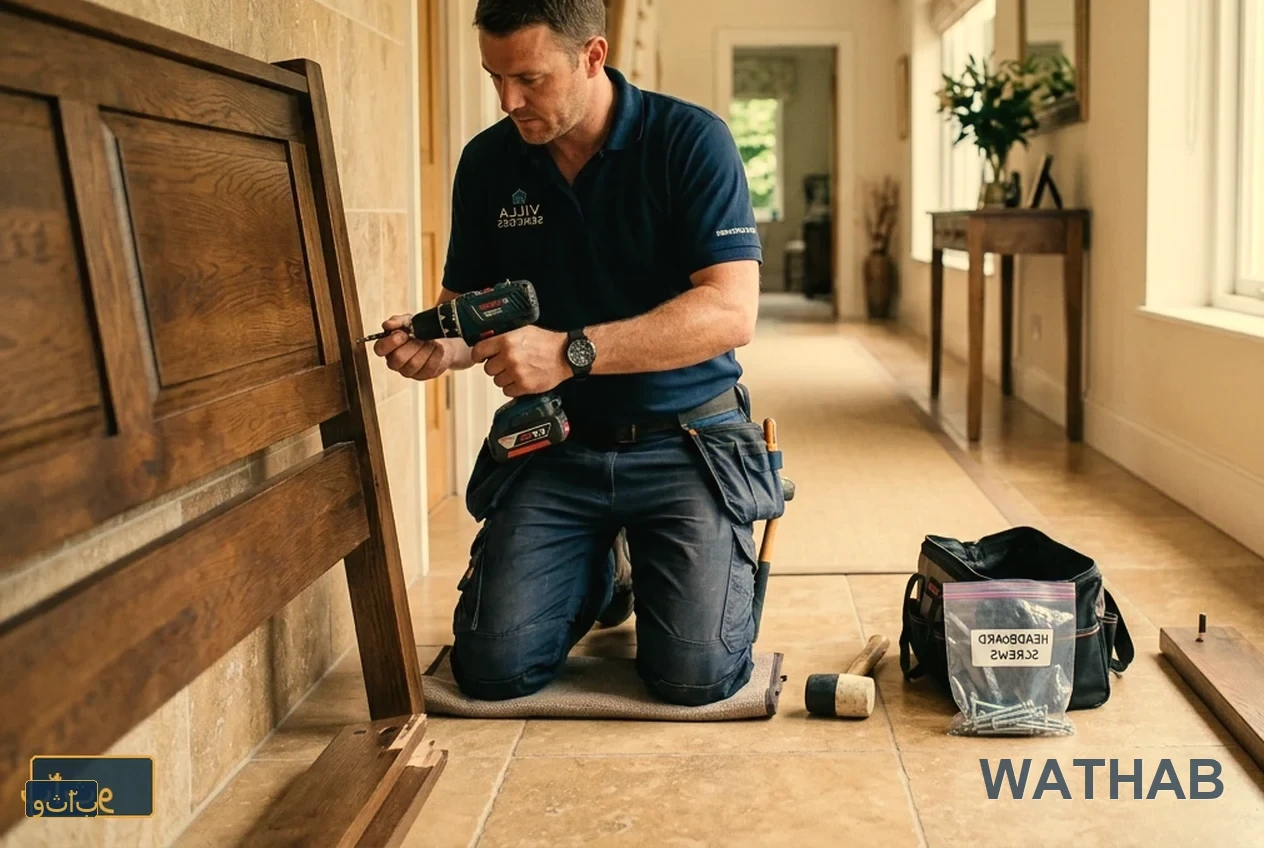
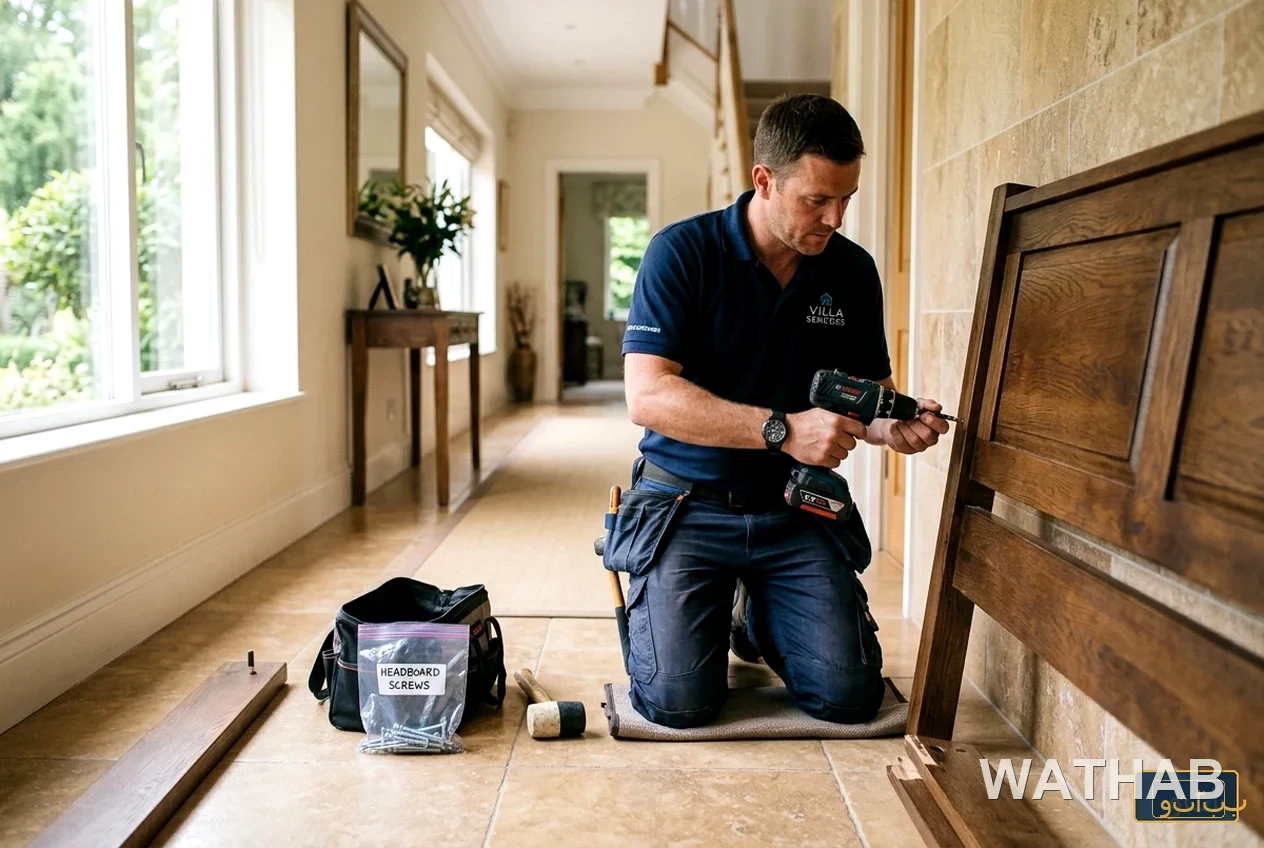
The greatest source of chaos at reassembly is not a lost part but not knowing which screws belong to which piece. The system we use and recommend is simple: give each piece of furniture a number (1 for the master bedroom wardrobe, 2 for its bed, and so on), stick that number on every panel on the hidden back face, put all its screws and fittings in a sealed bag marked with the same number, and tape that bag to the largest panel in the set rather than into a separate box that can go missing. Photograph the piece from several angles before dismantling, and photograph any complicated joint during the process. Those photographs save hours at reassembly, especially with pieces being dismantled for the first time.
Cartons: why grocery boxes do not work
The economical route many people take — collecting used boxes from supermarkets and shops — looks like a saving but usually costs more in the short run. Food cartons are designed to carry a specific weight once under warehouse conditions, not to be stacked in a vibrating truck. They are usually three-ply or less, may be damp or contaminated with food residue that brings insects into your new home, and come in inconsistent sizes so they do not stack stably in the truck, leaving voids and allowing movement. A professional five-ply carton in a standard size costs a few riyals, carries twenty kilograms and stacks solidly. If you want to economise, use collected boxes only for light, non-valuable items such as pillows and toys, and keep professional cartons for glass, appliances and books.
What must never be packed or moved at all
An important list many people overlook that can cause genuine problems. Flammable materials: gas cylinders, fuel, paint thinners and pressurised aerosols are prohibited in freight by regulation and can lead to the seizure of an entire shipment at inspection points. Liquids generally: cleaning products, perfumes and oils, because one leaking bottle ruins an entire box and often what sits beside it. Perishable and opened foodstuffs, which attract insects and carry them into your new home. Plants on long routes, since they cannot survive hours without light and ventilation. And valuables, official documents, jewellery and medicines — these are not packed with the load at all but carried personally in hand luggage. Make disposing of these categories part of the sorting stage rather than a surprise on loading day.
Checklist before moving day
Review these points before the crew arrives:
Every box closed, numbered and labelled
Leave no box open or unmarked. Write the number, destination room and contents on more than one face, and mark fragile boxes in a different colour so they are visible during fast loading.
Each piece's screws taped to it
Check that every dismantled piece's fittings bag is taped to its largest panel rather than sitting in a separate box. Bags collected into one box become a puzzle on assembly day.
Fragile items clearly marked
Glass, mirrors, screens and artwork marked “glass” with an arrow showing the correct standing orientation. Do not assume the shape alone will signal it during fast handling.
Valuables separated and with you
Documents, jewellery, medicines and personal devices in a bag you carry yourself, kept apart from everything else. Check this last, just before loading begins.
The most costly packing mistakes
Widespread errors that defeat the purpose of packing entirely:
Stretch film directly on painted timber
Stretch film traps moisture beneath it and can leave adhesive residue on the finish in Jeddah's heat, especially over several days. The rule is a soft blanket against the surface first, then stretch film on the outside to hold it.
Leaving voids inside boxes
A void means movement, and movement means impact and breakage however strong the box. Fill every gap with crumpled paper or towels. The test: shake the box, and if you hear anything the padding is insufficient.
Filling large boxes with heavy items
A large box full of books weighing forty kilograms cannot be lifted safely and its base usually fails. Heavy in small boxes, light and bulky in large ones, and no more than twenty kilograms per box.
Leaving packing until moving day
Starting to pack on the morning of the move means rushed work, poor decisions, forgotten items, a disrupted crew and costly waiting hours. Start a week to ten days ahead in calm stages.
Tips that save time and money
Practical tricks that reduce both materials and hours.
Use what you already own as packing material
Towels, blankets and thick clothing are excellent free packing materials that are being moved anyway. Use them to wrap plates, glassware and delicate items instead of buying extra bubble wrap. It reduces both your material cost and your total volume at the same time.
Do not empty light chest drawers
A practical exception to the rule about emptying drawers: light drawers containing only clothing in small units can be left full and secured by wrapping stretch film around the whole unit. It saves boxes and time. Do not apply it to heavy drawers or tall units.
Pack a first-night box and keep it in your car
One clearly marked box holding bed linen and towels, cleaning basics, chargers, medicines, a change of clothes per person, a few plates and cups, and simple tools such as a screwdriver and tape. Keep it in your car, not the truck.
Frequently asked questions about packing furniture
Direct answers to the most common packing questions:
A week to ten days ahead. Start with what you do not use daily — books, ornaments and out-of-season clothing — and finish with kitchen and bathroom essentials on the last day, so you live almost normally until moving day.
Around 20 to 30 medium boxes and 8 to 12 large ones for linen, plus one roll of bubble wrap, two rolls of stretch film and four to six rolls of tape. Total material cost runs SAR 150 to 300.
Only for light, non-valuable items. Grocery cartons are usually three-ply and weak, may be damp or contaminated with food residue that attracts insects, and come in inconsistent sizes that do not stack stably in the truck.
Tape an X across the face so fragments hold together if it breaks, then two layers of bubble wrap, then corrugated card on both faces, marked “glass — this way up”. Always carry them vertically, never flat.
Gas cylinders, fuel, paint thinners and pressurised aerosols are prohibited by regulation. So are liquids and cleaning products because they leak, and perishable foods because they attract insects. Documents, jewellery and medicines travel with you personally.
From SAR 200 for a small flat, rising to SAR 600 for larger apartments and SAR 900 to 1,500 for villas, including professional materials and trained packers. It appears as a separate published line in the quote.
Correct packing costs less than repairing one item
Why we publish a complete guide to a service we sell.
It may seem strange for a company selling a packing service to publish a free guide teaching customers to pack themselves. But our experience at Wathab is that the damage we see in transit does not come from customers choosing to pack their own belongings; it comes from incorrect packing, whether done by the customer or by a company that does not know the difference between one material and another. Stretch film wrapped straight onto painted timber that marks the finish in Jeddah's heat; a large box stuffed with books whose base fails halfway; a mirror carried flat under another load; engineered board left unsealed that absorbs coastal humidity and swells within weeks. These are errors of knowledge rather than intent, and publishing the knowledge reduces them whether you do the work yourself or supervise someone doing it for you. Apply what is in this guide and you will genuinely protect your belongings for a material cost of between one hundred and fifty and three hundred riyals for an average flat. And if your time is too short for a week of packing, or you have pieces you would rather not experiment with, our full packing service starts at two hundred riyals including professional materials and trained packers, and appears as a separate published line in the quote rather than a hidden cost.
WATHAB Moving & Storage Directory
Complete navigation tree providing direct access to all service categories and locations:
Furniture Moving Services in Jeddah
Furniture Storage Units
Intercity Long-Haul Relocation Routes
Moving Guides & Articles
Jeddah Service Districts & Neighborhoods
Start Your Safe Relocation Journey Today
Do not leave your valuable belongings to chance. Call WATHAB now to book a free inspection and customized quote.